


ND1000 ND2000 ND2-1000 Filters
You've probably seen those breathtaking images where waterfalls turn into silky mist, clouds become streaky brushstrokes across the sky, and busy city streets look eerily empty. You know they use ND filters. But here's the thing—sometimes, a basic ND8 or even ND400 isn't enough. Sometimes, you need to go extreme.
Welcome to the world of ND1000, ND2000, and ND2-1000 filters. These aren't your everyday light reducers. These are the heavy hitters.
Take a look at these lists.
| P/N | Description | Compatible Accessories | Remark |
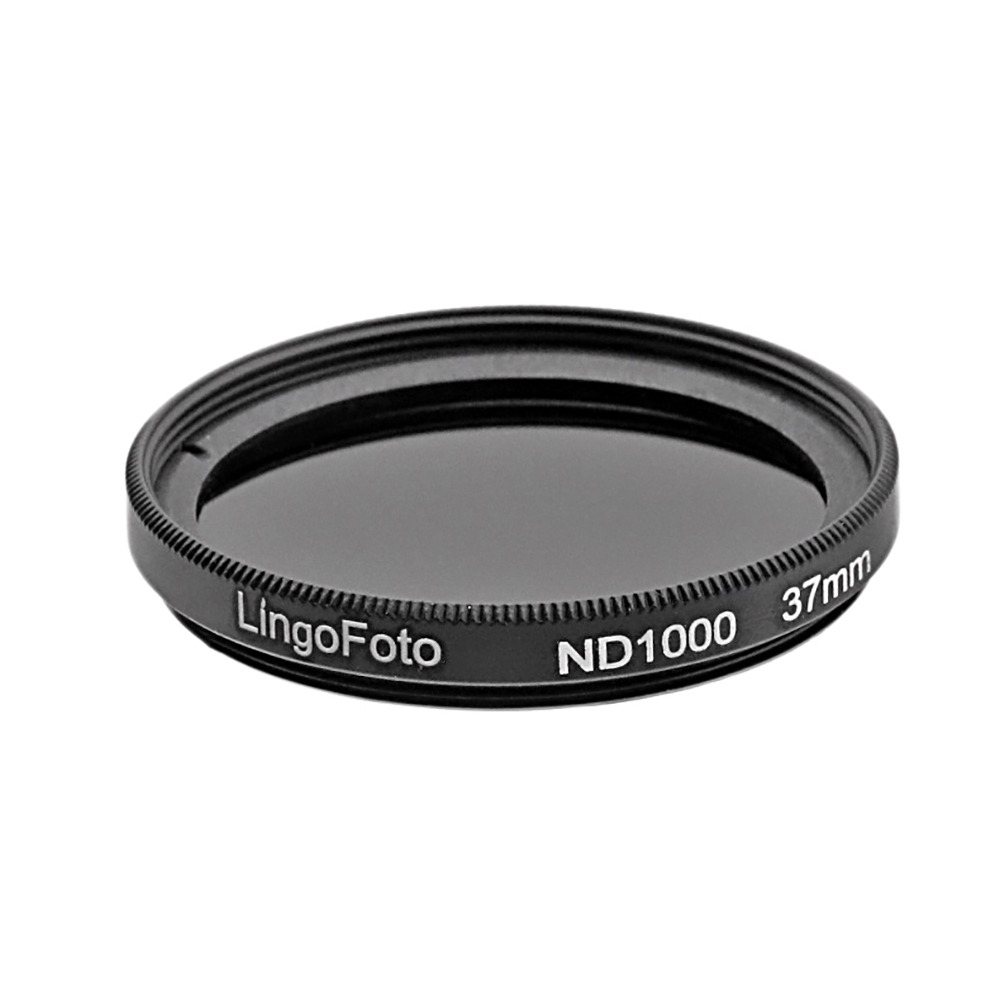
| NP5401 | 37mm Optical ND1000 Lens Filter | Ø 37mm lens | Material: Optical glass + Aluminum Alloy Frame |
| NP5402 | 40.5mm Optical ND1000 Lens Filter | Ø 40.5mm lens | Material: Optical glass + Aluminum Alloy Frame |
| NP5403 | 43mm Optical ND1000 Lens Filter | Ø 43mm lens | Material: Optical glass + Aluminum Alloy Frame |
| NP5404 | 46mm Optical ND1000 Lens Filter | Ø 46mm lens | Material: Optical glass + Aluminum Alloy Frame |
| NP5405 | 49mm Optical ND1000 Lens Filter | Ø 49mm lens | Material: Optical glass + Aluminum Alloy Frame |
| NP5406 | 52mm Optical ND1000 Lens Filter | Ø 52mm lens | Material: Optical glass + Aluminum Alloy Frame |
| NP5407 | 55mm Optical ND1000 Lens Filter | Ø 55mm lens | Material: Optical glass + Aluminum Alloy Frame |
| NP5408 | 58mm Optical ND1000 Lens Filter | Ø 58mm lens | Material: Optical glass + Aluminum Alloy Frame |
| NP5409 | 62mm Optical ND1000 Lens Filter | Ø 62mm lens | Material: Optical glass + Aluminum Alloy Frame |
| NP5410 | 67mm Optical ND1000 Lens Filter | Ø 67mm lens | Material: Optical glass + Aluminum Alloy Frame |
| NP5411 | 72mm Optical ND1000 Lens Filter | Ø 72mm lens | Material: Optical glass + Aluminum Alloy Frame |
| NP5412 | 77mm Optical ND1000 Lens Filter | Ø 77mm lens | Material: Optical glass + Aluminum Alloy Frame |
| NP5413 | 82mm Optical ND1000 Lens Filter | Ø 82mm lens | Material: Optical glass + Aluminum Alloy Frame |
| P/N | Description | Compatible Accessories | Remark |
| NP5431 | 37mm Optical ND2000 Lens Filter | Ø 37mm lens | Material: Optical glass + Aluminum Alloy Frame |
| NP5432 | 40.5mm Optical ND2000 Lens Filter | Ø 40.5mm lens | Material: Optical glass + Aluminum Alloy Frame |
| NP5433 | 43mm Optical ND2000 Lens Filter | Ø 43mm lens | Material: Optical glass + Aluminum Alloy Frame |
| NP5434 | 46mm Optical ND2000 Lens Filter | Ø 46mm lens | Material: Optical glass + Aluminum Alloy Frame |
| NP5435 | 49mm Optical ND2000 Lens Filter | Ø 49mm lens | Material: Optical glass + Aluminum Alloy Frame |
| NP5436 | 52mm Optical ND2000 Lens Filter | Ø 52mm lens | Material: Optical glass + Aluminum Alloy Frame |
| NP5439 | 62mm Optical ND2000 Lens Filter | Ø 62mm lens | Material: Optical glass + Aluminum Alloy Frame |
| P/N | Description | Compatible Accessories | Remark |
| NP5474 | ND2-1000 Filter for 37MM | Ø 37mm lens | Material: Optical glass + Aluminum Alloy Frame |
| NP5480 | ND2-1000 Filter for 55MM | Ø 55mm lens | Material: Optical glass + Aluminum Alloy Frame |
| NP5481 | ND2-1000 Filter for 58MM | Ø 58mm lens | Material: Optical glass + Aluminum Alloy Frame |
| NP5488 | ND2-1000 Filter with 16 Layers Coating for 37MM | Ø 37mm lens | Material: Optical glass + Aluminum Alloy Frame + MRC-16 Multi-Resistant Coating |
| NP5489 | ND2-1000 Filter with 16 Layers Coating for 40.5MM | Ø 40.5mm lens | Material: Optical glass + Aluminum Alloy Frame + MRC-16 Multi-Resistant Coating |
| NP5490 | ND2-1000 Filter with 16 Layers Coating for 43MM | Ø 43mm lens | Material: Optical glass + Aluminum Alloy Frame + MRC-16 Multi-Resistant Coating |
| NP5491 | ND2-1000 Filter with 16 Layers Coating for 46MM | Ø 46mm lens | Material: Optical glass + Aluminum Alloy Frame + MRC-16 Multi-Resistant Coating |
| NP5492 | ND2-1000 Filter with 16 Layers Coating for 49MM | Ø 49mm lens | Material: Optical glass + Aluminum Alloy Frame + MRC-16 Multi-Resistant Coating |
| NP5493 | ND2-1000 Filter with 16 Layers Coating for 52MM | Ø 52mm lens | Material: Optical glass + Aluminum Alloy Frame + MRC-16 Multi-Resistant Coating |
| NP5494 | ND2-1000 Filter with 16 Layers Coating for 55MM | Ø 55mm lens | Material: Optical glass + Aluminum Alloy Frame + MRC-16 Multi-Resistant Coating |
| NP5495 | ND2-1000 Filter with 16 Layers Coating for 58MM | Ø 58mm lens | Material: Optical glass + Aluminum Alloy Frame + MRC-16 Multi-Resistant Coating |
| NP5496 | ND2-1000 Filter with 16 Layers Coating for 62MM | Ø 62mm lens | Material: Optical glass + Aluminum Alloy Frame + MRC-16 Multi-Resistant Coating |
| NP5497 | ND2-1000 Filter with 16 Layers Coating for 67MM | Ø 67mm lens | Material: Optical glass + Aluminum Alloy Frame + MRC-16 Multi-Resistant Coating |
| NP5498 | ND2-1000 Filter with 16 Layers Coating for 72MM | Ø 72mm lens | Material: Optical glass + Aluminum Alloy Frame + MRC-16 Multi-Resistant Coating |
| NP5499 | ND2-1000 Filter with 16 Layers Coating for 77MM | Ø 77mm lens | Material: Optical glass + Aluminum Alloy Frame + MRC-16 Multi-Resistant Coating |
| NP5500 | ND2-1000 Filter with 16 Layers Coating for 82MM | Ø 82mm lens | Material: Optical glass + Aluminum Alloy Frame + MRC-16 Multi-Resistant Coating |
| NP5501 | ND2-1000 Filter with 16 Layers Coating for 86MM | Ø 86mm lens | Material: Optical glass + Aluminum Alloy Frame + MRC-16 Multi-Resistant Coating |
We're talking about serious light-stopping power in sizes from 37mm all the way up to 86mm (NP5401 to NP5501) . Whether you're shooting landscapes, seascapes, or architecture, there's an extreme ND filter here that will let you create images most people think require a magic wand.
So, What Makes These Filters"Extreme"?
Let's break down what these numbers actually mean:
ND1000: This filter reduces light by 10 full stops. That's 1,000 times less light reaching your sensor. In plain English? It turns a bright, sunny afternoon into what looks like twilight, allowing for exposures of 30 seconds or more—even in the middle of the day.
ND2000: This one cuts light by 11 stops—2,000 times less light. Even darker. Even longer exposures. We're talking minutes-long exposures in daylight.
ND2-1000 (Variable): This is the all-in-one solution. Rotate the filter and adjust from 1 stop all the way to 10 stops of darkness. One filter, endless creative possibilities.
Why Would You Need This Much Darkness?
Great question. Here's where the magic happens:
Daylight long exposures: Want to turn a crowded beach into a peaceful, people-free scene? A 30-second exposure during the day will make moving people disappear entirely. But you need serious ND power to pull that off.
Silky water in bright sun: Waterfalls and rivers look best with multi-second exposures. In bright sunlight, even ND8 might not be enough. ND1000 or ND2000 gives you that control.
Cloud movement: Turn puffy clouds into dramatic streaks across the sky. Minutes-long exposures create that effect, but you need extreme ND filters to make it work in daylight.
Empty cityscapes: Long exposures make moving cars and people vanish, leaving the architecture pristine and still. ND1000 is your friend here.
Two Paths to Extreme ND: Standard vs. Coated
Notice there are two versions of the ND2-1000 variable filters:
Standard ND2-1000 (NP5474, NP5480, NP5481): Solid optical glass, aluminum frame. Gets the job done.
MRC-16 Coated ND2-1000 (NP5488 to NP5501): Same optical glass and aluminum frame, but with 16-layer multi-resistant coating. This means:
Better light transmission
Reduced reflections and flare
Waterproof and oil-resistant surface
Scratch resistance
Easier cleaning
If you're serious about image quality and shoot in challenging conditions, the coated versions are worth the upgrade.
Here are the related FAQ for ND filters.
Q: ND1000 vs. ND2000—which one should I get?
A: It depends on your goals. ND1000 (10 stops) is the industry standard for extreme long exposures. It'll get you 30-second to 2-minute exposures in daylight—perfect for most creative work. ND2000 (11 stops) is for when you want even longer exposures—think 4-5 minutes or more. If you're just starting with extreme ND, go with ND1000. If you're already hooked and want more, ND2000 is your next step.
Q: How do I calculate exposure with a 10-stop filter?
A: Simple math, or let your camera help. Without the filter, let's say your exposure is 1/60 second. Add 10 stops, and you're at about 1 second (1/60 → 1/30 → 1/15 → 1/8 → 1/4 → 1/2 → 1 → 2 seconds—wait, that's 7 stops? Let me recalculate carefully.)
Actually, let me give you a better rule: 10 stops means your exposure time multiplies by about 1,000. So 1/60 second becomes roughly 16 seconds. Most cameras can't meter through a 10-stop filter—it's too dark. So you meter without the filter, then use an app or chart to calculate the equivalent exposure with the filter. Many photographers use smartphone apps like PhotoPills or ND Calc to do the math instantly.
Q: Can I use these for video?
A: Absolutely! In fact, variable ND filters (like the ND2-1000) are incredibly popular with videographers. You can quickly adjust the darkness as light conditions change, all while maintaining the correct shutter speed for natural-looking motion. The 16-layer coated versions are especially good for video because they minimize flare and maintain contrast.
Q: Will a 10-stop filter make my photos soft or blurry?
A: Not if you use a tripod! At these exposure times, a tripod is absolutely essential. The filter itself won't soften your images—quality optical glass maintains sharpness. But any camera movement during a 30-second exposure will blur everything. Tripod = sharp. Handheld = blurry mess.
Q: What about color casts? Do these filters change colors?
A: Quality ND filters are designed to be"neutral"—they shouldn't change colors. Our optical glass construction helps maintain accurate color. That said, at 10+ stops of darkness, some very slight color shifts can occur with any filter. The 16-layer coated versions are engineered to minimize this even further. If you notice a slight color cast, it's usually easy to correct in post-processing.
Q: What's the difference between the standard and MRC-16 coated versions?
A: Think of it like this: the standard version is a reliable workhorse—good optical glass, solid construction, does the job. The MRC-16 coated version adds premium features: better flare resistance, easier cleaning (water and oil bead up), improved scratch resistance, and slightly better light transmission. If you shoot in challenging conditions (near water, in dusty environments, or toward the sun), the coated version is worth every penny.
Q: Can I stack these with other filters?
A: You can, but be careful. At these extreme magnifications, stacking increases the risk of vignetting (dark corners) and can reduce image quality. If you need, say, polarization with your long exposure, consider a filter that combines both functions, or be prepared to do some post-processing cleanup.
Q: Will these fit my lens?
A: Check your lens for the"Ø"symbol followed by a number—like Ø 58mm. That's your filter thread size. Match it to the product (e.g., NP5408 for ND1000 at 58mm, NP5436 for ND2000 at 52mm, or NP5495 for coated ND2-1000 at 58mm). If your lens has that size, these will screw right on.
Q: Do I need a remote shutter release for these long exposures?
A: Highly recommended. Even pressing the shutter button can cause slight camera movement during a multi-second exposure. A remote release (wired or wireless) lets you trigger the camera without touching it. If you don't have one, use your camera's self-timer—2 seconds is usually enough for vibrations to settle.
Q: What's the best subject for extreme ND filters?
A: Water is a classic—waterfalls, rivers, waves, fountains. Clouds and moving skies are another favorite. Architecture with moving people or cars (to make them disappear) is also popular. And don't forget abstract compositions—long exposures can turn ordinary scenes into dreamy, painterly images.
The Bottom Line:
Extreme ND filters open up a whole new world of creative photography. They let you do things with daylight that were once only possible at dawn or dusk. Whether you choose the reliable ND1000, the even darker ND2000, or the flexible ND2-1000 variable, you're buying the ability to see time differently.
With optical glass construction, durable aluminum frames, and optional 16-layer coating for premium performance, these filters are built to deliver. Find your size, pick your darkness level, grab a tripod, and start exploring the magic of extreme long exposure. Your creative potential just expanded dramatically.


