


Macro Extension Tube Set
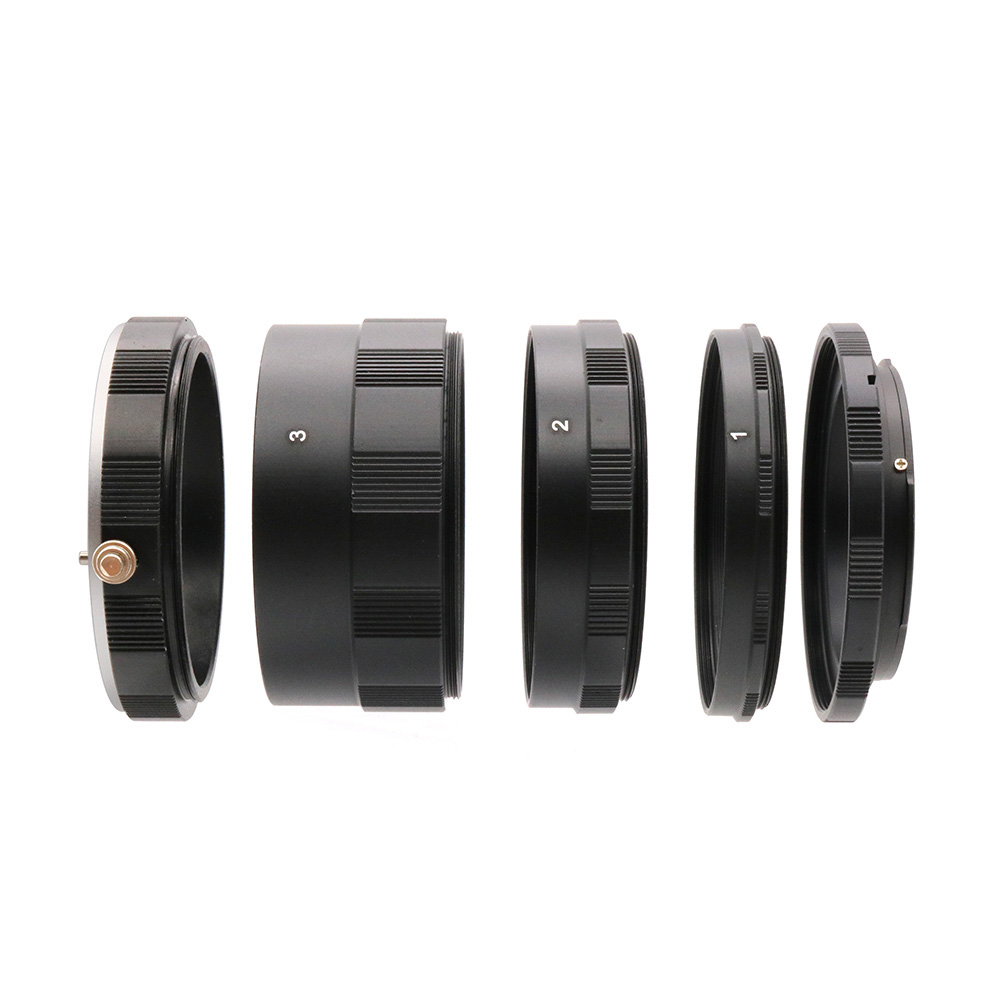
| P/N | Description | Compatible Camera |
| LC8302 | Macro Extension Ring for EOS | Canon EOS (EF, EF-S) Mount D/SLR Cameras |
| LC8303 | Macro Extension Ring for NEX | Sony Alpha & NEX E-mount Mirrorless Cameras |
| LC8304 | Macro Extension Ring for AI | Nikon F-mount digital cameras |
| LC8305 | Macro Extension Ring for M42 | M42 42mm Screw Mount Set for Film/Digital SLR |
| LC8306 | Macro Extension Ring for PK | Pentax K PK Mount Cameras |
| LC8307 | Macro Extension Ring for OM4/3 | Olympus Four Thirds (4/3) mount Camera |
| LC8308 | Macro Extension Ring for MA/AF | Sony Alpha Minolta MA mount cameras |
| LC8309 | Macro Extension Ring for M4/3 | PANASONIC Olympus micro 4/3 MFT mount Cameras |
| LC8310 | Macro Extension Ring for NIKON 1 | Nikon 1 Mount Camera |
| LC8313 | Macro Extension Tube Ring for M39 | 39mm Screw Mount Digital SLR Camera |
| LC8314 | Macro Extension Tube Ring for FX | Fuji FX Mount Camera |
| LC8311 | Back-up Ring for macro extension tube ring for AI | Nikon F-mount digital cameras |
| LC8312 | Back-up Ring for macro extension tube ring for NEX | Sony Alpha & NEX E-mount Mirrorless Cameras |
| LC8315a | Automatic Macro Extension Tube(Canon) Blue | Canon EOS EF Mount Camera |
| LC8315b | Automatic Macro Extension Tube(Canon) Black | Canon EOS EF Mount Camera |
| LC8315c | Automatic Macro Extension Tube(Canon) Silver | Canon EOS EF Mount Camera |
| LC8315d | Automatic Macro Extension Tube(Canon.) Red | Canon EOS EF Mount Camera |
It’s all about distance. By moving your lens farther away from the camera's sensor, extension tubes allow it to focus much, much closer than it normally can. The longer the tube (or the more tubes you stack), the greater the magnification. It’s a purely mechanical, optical trick that unlocks a hidden capability in your gear.
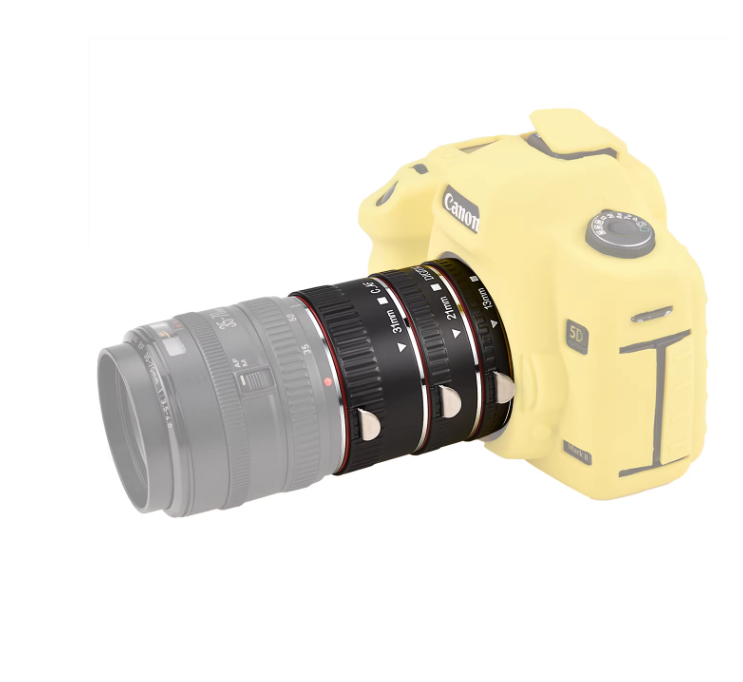
Manual vs. Automatic: A Key Choice
This list shows two main types, and choosing the right one is important:
Basic Extension Rings (e.g., LC8302, LC8304): These are simple hollow tubes. They're inexpensive and work with any lens, but they have a big catch: they break the electronic connection between your lens and camera. This means:
No autofocus.
No automatic aperture control. You'll likely need to set the aperture on the lens before attaching it, or use a lens with a manual aperture ring.
Your camera won't record the aperture (f-stop) in the photo's data.
Automatic Extension Tubes (e.g., LC8315a-d for Canon): These are the upgraded version. They have electrical contacts that pass through, maintaining the vital link between your lens and camera body.
You keep autofocus (though macro is often best done manually).
You keep full electronic aperture control.
Everything works just like normal, only now your lens can focus incredibly close.
That's a spacer or an extra, thinner ring. It's used for fine-tuning the magnification or for achieving a specific working distance when combined with the main extension tubes. It gives you more control over how much macro effect you get.
Not in the way a cheap filter or adapter with glass might. Since they're empty, extension tubes don't introduce new glass or optical flaws. However, macro photography magnifies everything—including any slight softness your lens might have and, most importantly, camera shake. Using a tripod and good technique would be helpful.
Yes, effectively. Extending the lens reduces the amount of light reaching the sensor. You might need to increase your ISO or use a longer shutter speed. Your camera's light meter will usually compensate for this automatically.
Technically yes, but results vary. They work wonderfully with standard 50mm primes, often creating a perfect 1:1 macro setup. With zoom lenses, the effect can be less dramatic. With wide-angle lenses, it can get... weird and fun. Experiment!
Extension tubes are generally superior. A screw-on close-up filter (like a magnifying glass for your lens) often degrades image quality at the edges. Extension tubes, being empty, preserve the optical quality of your lens—you're just using it in a new way.


