

Fluorescent Light Filter
Ever taken a photo indoors under fluorescent lights and ended up with a weird greenish or bluish cast on your images? You adjust your white balance. You try to fix it in editing. But somehow, the colors still look... off.
There's a simple solution, and it screws right onto your lens. Meet the FLD filter.
Take a look at this lineup. We're covering sizes from 37mm all the way up to 95mm (NP5113 to NP5111) . Whether you're shooting with a compact camera via an adapter tube or a serious telephoto lens, there's an FLD filter here that will fit.
| P/N | Description | Compatible Accessories | Remark |
| NP5113 | FLD Filter for 37mm | Ø 37mm lens | Material: Optical glass + Aluminum Alloy Frame |
| NP5114 | FLD Filter for 39mm | Ø 39mm lens | Material: Optical glass + Aluminum Alloy Frame |
| NP5115 | FLD Filter for 40.5mm | Ø 40.5mm lens | Material: Optical glass + Aluminum Alloy Frame |
| NP5116 | FLD Filter for 43mm | Ø 43mm lens | Material: Optical glass + Aluminum Alloy Frame |
| NP5117 | FLD Filter for 46mm | Ø 46mm lens | Material: Optical glass + Aluminum Alloy Frame |
| NP5101 | FLD Filter for 49mm | Ø 49mm lens | Material: Optical glass + Aluminum Alloy Frame |
| NP5102 | FLD Filter for 52mm | Ø 52mm lens | Material: Optical glass + Aluminum Alloy Frame |
| NP5103 | FLD Filter for 55mm | Ø 55mm lens | Material: Optical glass + Aluminum Alloy Frame |
| NP5104 | FLD Filter for 58mm | Ø 58mm lens | Material: Optical glass + Aluminum Alloy Frame |
| NP5105 | FLD Filter for 62mm | Ø 62mm lens | Material: Optical glass + Aluminum Alloy Frame |
| NP5106 | FLD Filter for 67mm | Ø 67mm lens | Material: Optical glass + Aluminum Alloy Frame |
| NP5107 | FLD Filter for 72mm | Ø 72mm lens | Material: Optical glass + Aluminum Alloy Frame |
| NP5108 | FLD Filter for 77mm | Ø 77mm lens | Material: Optical glass + Aluminum Alloy Frame |
| NP5109 | FLD Filter for 82mm | Ø 82mm lens | Material: Optical glass + Aluminum Alloy Frame |
| NP5110 | FLD Filter for 86mm | Ø 86mm lens | Material: Optical glass + Aluminum Alloy Frame |
| NP5111 | FLD Filter for 95mm | Ø 95mm lens | Material: Optical glass + Aluminum Alloy Frame |
So, What Exactly Is an FLD Filter?
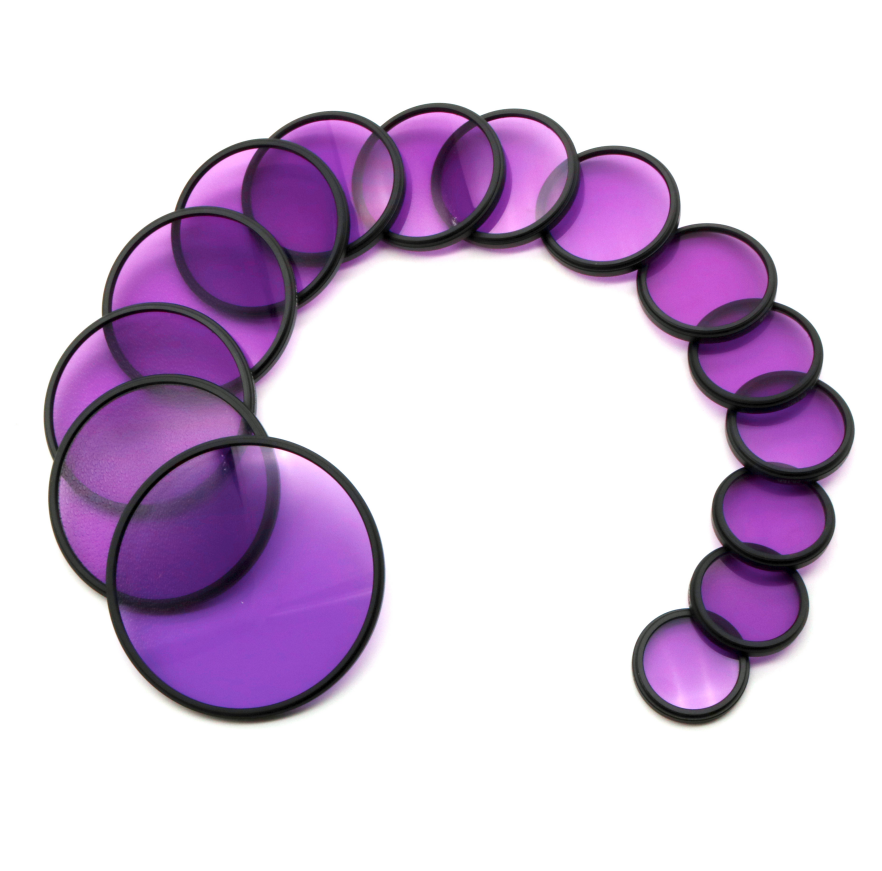
FLD stands for"Fluorescent Light Filter."Its job is simple but important: to correct the ugly color cast caused by fluorescent lighting.
Here's what happens. Fluorescent lights don't produce a full, balanced spectrum like sunlight. They spike in certain wavelengths—especially green and blue. When you shoot under these lights without correction, your photos take on that telltale greenish or bluish tint. It's especially noticeable in skin tones, making people look unhealthy or sick.
An FLD filter is a magenta-colored filter that counteracts that green spike. It absorbs the excess green and blue light, allowing more balanced colors to reach your sensor. The result? Skin tones look natural. Whites look white. Your photos look like they were taken under proper lighting.
Is This Still Relevant in the Digital Age?
Great question. Modern digital cameras have sophisticated white balance systems that can correct for fluorescent lighting to some degree. But here's the thing: auto white balance isn't perfect. It can struggle with mixed lighting situations, or when the fluorescent lights have a particularly strong color cast.
An FLD filter gives you two advantages:
It corrects the light before it hits your sensor – You get accurate color straight out of camera, saving time in post-processing.
It works consistently – No guessing whether your camera's auto white balance got it right. The filter does its job every time.
Plus, if you shoot film—especially color slide film where you can't easily correct later—an FLD filter is absolutely essential for indoor shooting under fluorescent lights.
What's Inside These Filters?
These FLD filters feature optical glass in an aluminum alloy frame. Optical glass means you're not sacrificing image quality for color correction. The colors will be accurate, and your images will stay sharp. The aluminum frame keeps everything lightweight and durable.
Let's gone through the FAQ for this FLD filter.
Q: How is this different from a UV filter?
A: A UV filter blocks ultraviolet light—it's mostly used for protection and to reduce haze. An FLD filter is a color correction tool. It specifically targets the green and blue spikes from fluorescent lighting. You wouldn't use an FLD filter outdoors in sunlight (it would add a magenta cast). You wouldn't use a UV filter to fix fluorescent lighting (it wouldn't help). They serve completely different purposes.
Q: Can't I just fix this in Photoshop or Lightroom?
A: You can, and many photographers do. But there are advantages to getting it right in camera. First, it saves time—no need to tweak every image later. Second, if you shoot JPEG instead of RAW, you have less flexibility in post-processing. Third, for video work, an FLD filter is often essential because correcting color casts in video is more complex. And finally, for film shooters, there is no"fix it later"—you need the filter.
Q: Will this filter work under all artificial lights?
A: FLD filters are designed specifically for standard fluorescent lights (the long tube lights commonly found in offices, schools, and stores). For other types of artificial lighting—like LED, tungsten, or halogen—different filters are needed. Check your light source before choosing a filter.
Q: Will it make my photos darker?
A: Slightly. Like any filter, an FLD absorbs some light—about 1 stop worth. Your camera's meter will compensate automatically, but you might notice slightly slower shutter speeds. In bright indoor conditions, it's rarely an issue. In dimmer settings, you might need to bump up your ISO.
Q: Can I leave it on all the time?
A: You could, but you probably shouldn't. An FLD filter is designed for fluorescent lighting. If you use it outdoors in sunlight, it will add a magenta/purple cast to your images—which could be a creative effect if that's what you want! But for accurate color, only use it when shooting under fluorescent lights.
Q: Will this fit my lens?
A: Check your lens for the"Ø"symbol followed by a number—like Ø 58mm. That's your filter thread size. Match it to the product (e.g., NP5104 for 58mm). If your lens has that size, this will screw right on.
Q: Is optical glass better than resin for this type of filter?
A: Yes. Optical glass offers superior clarity and color accuracy compared to resin. For a color correction filter, getting the color right is the whole point—so optical glass is the right choice. The aluminum frame adds durability without adding weight.
Q: What about LED lights? Is there a filter for those?
A: LED lights are trickier because they vary widely in quality and color spectrum. Some LEDs are quite good; others have weird spikes. There are filters designed for specific types of LED lighting, but FLD is specifically for fluorescent. If you shoot under LEDs regularly, test your camera's white balance first—it might handle it well enough without a filter.
Q: Do I need this if I shoot RAW?
A: RAW gives you more flexibility in post-processing, so you can correct color casts more easily. But an FLD filter still saves you time and ensures consistent color across a series of shots. Plus, it's one less thing to remember in editing. It's a personal choice—many RAW shooters still use filters for convenience and consistency.
Fluorescent lighting is everywhere—offices, schools, stores, gyms. And it almost always makes photos look worse. An FLD filter is a simple, affordable solution that fixes the problem at the source. With optical glass construction and sizes to fit most lenses, it's a smart addition to any photographer's kit—especially if you shoot indoors regularly.
Find your size, screw one on, and say goodbye to that sickly green tint forever.


