
Common Camera Mounts Quick Reference
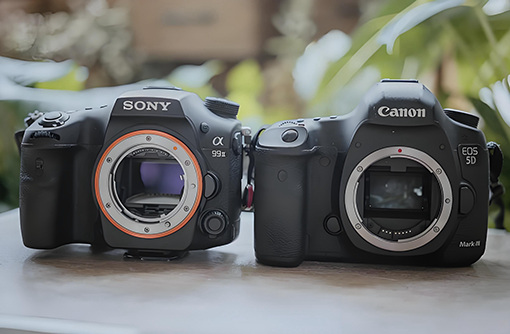
So, what exactly is a camera mount?
Think of it as the “connector” between your camera and your lens — the part that locks them together. There are a few common types, like bayonet (twist to lock), screw-in, and breech-lock styles.
You‘ve probably heard of mounts like Canon EF, Nikon Z, or Sony E for regular cameras. For industrial or specialty cameras, there are also ones like C-mount and S-mount.
The type of mount matters because it decides which lenses you can use. Things like flange distance (the space between the mount and the sensor) and throat size (the inner diameter) are what make
each mount different — and what affect whether a lens will fit and work properly.
Here is a Common Camera Mounts - Quick Reference
Current Main Mirrorless Systems
| Brand | Mount Name | Format | Status |
|---|---|---|---|
| Canon | RF Mount | Full-frame & APS-C | Current flagship system |
| Nikon | Z Mount | Full-frame & APS-C | Current flagship system |
| Sony | E Mount | Full-frame & APS-C | Current flagship system |
| Fujifilm | X Mount | APS-C | Mainstream system |
| Fujifilm | G Mount | Medium Format (44×33mm) | Professional system |
| Panasonic/Leica/Sigma | L Mount | Full-frame | Alliance system |
| OM System/Panasonic | Micro Four Thirds | M4/3 (17.3×13mm) | Compact system |
| Hasselblad | X Mount | Medium Format (44×33mm) | Professional system |
DSLR & Legacy Systems
| Brand | Mount Name | Format | Status |
|---|---|---|---|
| Canon | EF Mount | Full-frame | Legacy DSLR, adaptable |
| Canon | EF-S Mount | APS-C | Legacy DSLR, adaptable |
| Nikon | F Mount | Full-frame & APS-C | Legacy DSLR, adaptable |
| Sony | A Mount | Full-frame & APS-C | Legacy DSLR/SLT, adaptable |
| Pentax | K Mount | Full-frame & APS-C | Still produced (DSLR) |
| Olympus | Four Thirds | M4/3 | Legacy DSLR, adaptable |
Specialty & Cinema Mounts
| Type | Mount Name | Primary Use |
|---|---|---|
| Rangefinder | Leica M Mount | Rangefinder cameras |
| Medium Format | Pentax 645 Mount | Medium Format DSLR |
| Medium Format | Hasselblad H Mount | Medium Format DSLR |
| Cinema | PL Mount | Professional cinema |
| Cinema | EF Mount (Cine) | Cinema lenses |
| Vintage | M42 Screw Mount | Universal vintage |
Discontinued/Obsolete Systems
-
Canon EF-M Mount (APS-C mirrorless)
-
Nikon 1 Mount (1-inch sensor)
-
Pentax Q Mount (1/1.7-inch sensor)
-
Sigma SA Mount (DSLR)
Mirrorless Advantages:
-
Shorter flange distance (typically 16-20mm)
-
Larger diameter for better optics
-
Fully electronic communication
-
Generally lighter and more compact
Adaptability:
-
Most DSLR lenses can be adapted to mirrorless
-
Cross-brand adaptation often possible with limitations
-
Vintage lenses easily adaptable to mirrorless
Alliance Systems:
-
L-Mount Alliance: Leica, Panasonic, Sigma - shared full-frame standard
-
Micro Four Thirds: OM System, Panasonic - shared compact standard
Here is a Quick Selection Guide
For new buyers:
-
Full-frame mirrorless: RF, Z, E, or L Mount
-
APS-C mirrorless: X Mount (Fujifilm) or crop modes in RF/Z/E
-
Compact travel: Micro Four Thirds
-
Ultimate image quality: Medium Format (G Mount or Hasselblad X)
For existing lens owners:
-
Canon EF/EF-S → RF with excellent adaptation
-
Nikon F → Z with excellent adaptation
-
Sony A → E with good adaptation
-
Legacy lenses → Most mirrorless systems with adapters
Professional video:
-
Native E or RF Mount for hybrid shooters
-
PL Mount for dedicated cinema cameras
Basically, this covers the main types you'll find, what they work with, and what to keep in mind. Right now, mirrorless systems are where all the new action is—that's what most new cameras are. But DSLR mounts
aren't going away anytime soon, mostly because there's already a huge library of lenses out there for them. So if you've already got DSLR gear, it's still very much relevant.