


Canon Camera Lens Cap
Let's talk about the accessory that every Canon shooter owns but nobody daydreams about: the lens cap. You saved up for that L-series red ring or that sleek RF lens for a reason—incredible optics, fast autofocus, beautiful rendering. But that brilliant front glass element is surprisingly vulnerable. A single errant car key in your bag, a gust of sandy wind, or an accidental brush against a table edge can compromise your image quality.
Think of your lens cap not as a nuisance, but as the essential first piece of your protective system. It’s the simplest, most effective insurance policy you can buy for your gear. Our NP3180 series of Canon Lens Caps is designed to offer worry-free, universal protection that fits perfectly, so you can focus entirely on your vision, not on potential damage.
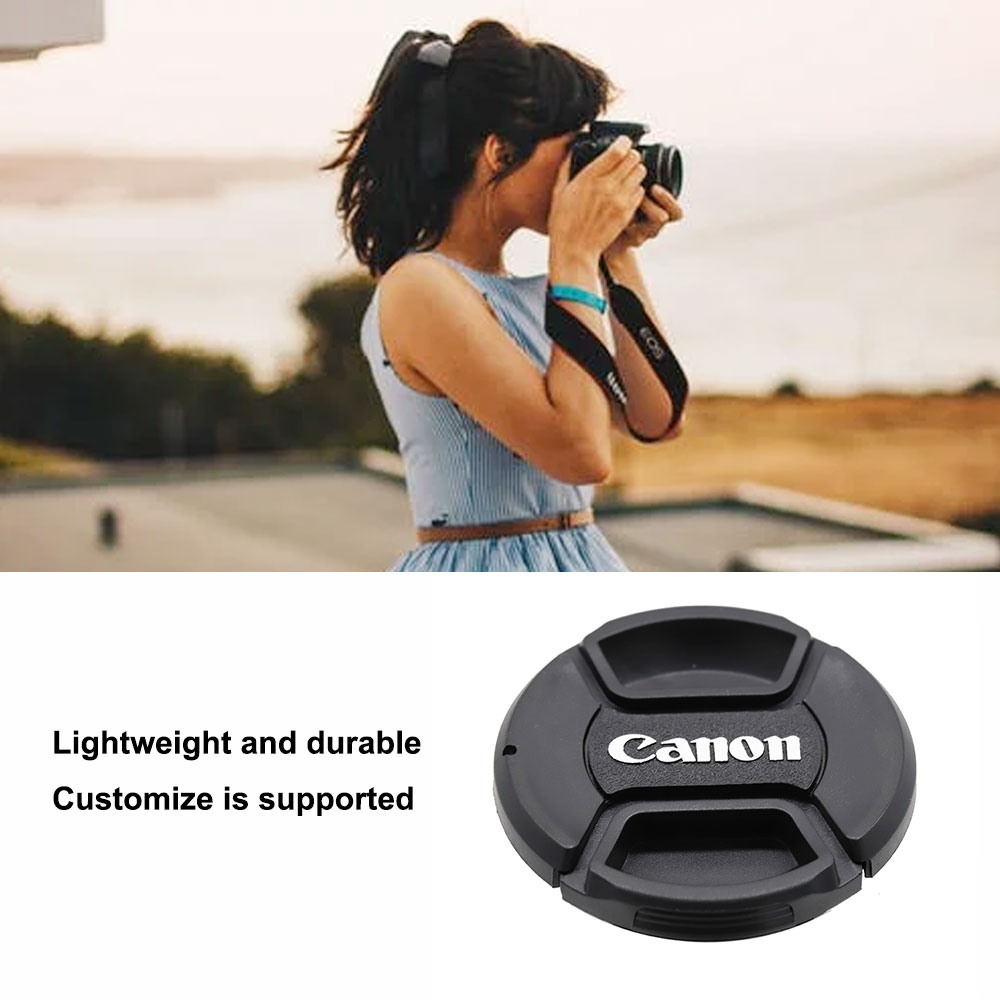
Your Canon Kit’s Universal Protector: One Number Is All You Need
The world of photography gear is complex, but finding your perfect lens cap shouldn’t be. It all comes down to a single, universal measurement: the filter thread diameter.
Do this now: Pick up your Canon lens—your trusty EF 50mm f/1.8, your workhorse RF 24-105mm, or your professional super-telephoto. Look at the very front edge. You’ll see the Ø symbol followed by a number (e.g., Ø58mm, Ø77mm, Ø82mm). This is your lens’s unique fingerprint for accessories.
| P/N | Description | Compatible Accessories |
| NP3180 | Canon Lens cap 49mm | all accessories with Ø 49mm thread |
| NP3181 | Canon Lens cap 52mm | all accessories with Ø 52mm thread |
| NP3182 | Canon Lens cap 55mm | all accessories with Ø 55mm thread |
| NP3183 | Canon Lens cap 58mm | all accessories with Ø 58mm thread |
| NP3184 | Canon Lens cap 62mm | all accessories with Ø 62mm thread |
| NP3185 | Canon Lens cap 67mm | all accessories with Ø 67mm thread |
| NP3186 | Canon Lens cap 72mm | all accessories with Ø 72mm thread |
| NP3187 | Canon Lens cap 77mm | all accessories with Ø 77mm thread |
| NP3188 | Canon Lens cap 82mm | all accessories with Ø 82mm thread |
| NP3189 | Canon Lens cap 86mm | all accessories with Ø 86mm thread |
You can see from Our List NP3180 series is organized by this exact number. No confusing cross-referencing needed. If your lens says 67mm, you need NP3185. If it says 82mm, you need NP3188. It’s a perfect, secure match every time.
Why This Range Covers Your Canon Journey:
From the compact RF primes to the massive white telephotos, Canon’s ecosystem is vast. Our cap series is curated to protect it all.
For Everyday & Essential Lenses: Sizes like NP3180 (49mm), NP3183 (58mm), and NP3184 (62mm) are perfect for classics like the 50mm f/1.8, many standard zooms, and popular compact lenses.
For Professional & Enthusiast Workhorses: The NP3185 (67mm), NP3187 (77mm), and NP3188 (82mm) sizes are where many of Canon’s most respected L-series zooms and fast primes live (think 24-70mm f/2.8, 70-200mm f/2.8 variants, and many prime lenses).
For Specialized & Super-Telephoto Glass: NP3189 (86mm) caters to the large front elements of ultra-wide lenses or telephotos, offering protection for your most significant investments.
The Universal Truth of the"Canon"Cap: Don’t let the name fool you. While designed with Canon users in mind, this cap is governed by physics, not brand loyalty. That 72mm cap (NP3186) will fit perfectly on a Sigma ART lens, a Tamron zoom, or a vintage manual lens—as long as the filter thread matches. It also fits over any screw-on filter (UV, CPL, ND), creating a seamless protective seal without removing your essential filters.
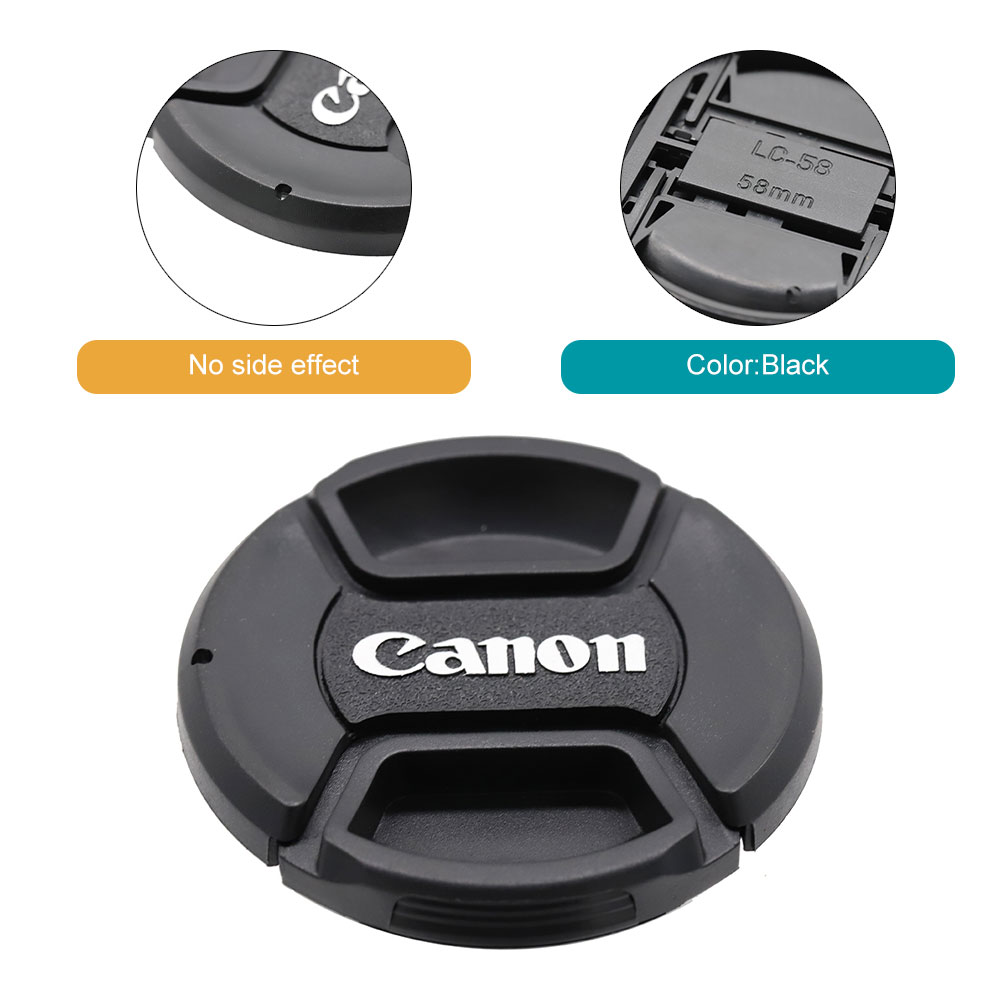
Your Canon-Specific Cap Conundrums, Solved.
“I have both EF and RF mount lenses. Do I need different caps?”
Not at all! This is the beauty of the thread-size system. Mount type (EF, RF, or even old FD with an adapter) is irrelevant here. What matters is the front filter thread. An EF 24-70mm f/2.8L II (77mm) and an RF 24-70mm f/2.8L (also typically 77mm) use the exact same NP3187 cap. One series protects your entire legacy and future.“The original Canon cap is fine. Why is this an upgrade?”
Consider this your tactical backup and convenience solution. Original caps have a habit of walking away. Having a spare of the precise size in your gear bag eliminates downtime. For photographers with multiple lenses, assigning a dedicated cap to each lens streamlines your workflow—no more playing musical chairs with a single cap.“What’s the official protocol with the lens hood? I see pros do it differently.”
Here’s the efficient, professional workflow for Canon shooters:Gear Up: Remove cap, store it (pocket/tether), attach lens hood. The hood stays on for shooting (flares, bumps, quick handling).
In the Field: Cap is off. Hood is on.
Short Break: Hood can remain on for readiness.
Pack Up: This is key. Cap goes on first for a dust/scratch seal. Then, you can often reverse the lens hood over the capped lens for compact storage. This two-layer system is optimal.
“I’m a travel photographer. Any tips for not losing caps in chaotic environments?”
Beyond the pocket habit, these are lifesavers:Use Your Strap: A short cap tether connecting the cap to your camera strap is the most reliable method. It dangles safely while you shoot.
The “Three-Point Check”: Before leaving any location, make it a ritual to physically touch: 1) Camera body, 2) Lens cap (on or in pocket), 3) Rear lens cap (if swapping lenses). This tactile check takes two seconds and saves headaches.
“Do I still need a cap if I use a high-quality UV filter for protection?”
A good filter is great for impact and scratch protection while shooting. However, a cap adds a second, crucial layer for storage and transport. It keeps dust and grime off the filter itself, so you’re not constantly cleaning it. Think of them as a team: the filter is your always-on shield, the cap is the dust cover when holstered.“My lens has a weird shape or a built-in petal hood. Will a standard cap fit?”
For the vast majority of Canon lenses with a standard filter thread, yes. However, some specialized lenses (like the RF 600mm f/11’s retracting hood or certain fisheyes) use bespoke cap designs. Always check your lens's specifications for the “Lens Cap” type. For 95% of Canon lenses, our standard pinched caps are the perfect, universal solution.


