


812 Warming Filter
You've probably been there. You're shooting a beautiful portrait in open shade, and everyone's skin looks a little... blue. Or you're photographing a stunning landscape late in the day, but the colors feel cold and lifeless. You check your white balance. It's set correctly. Something still feels off.
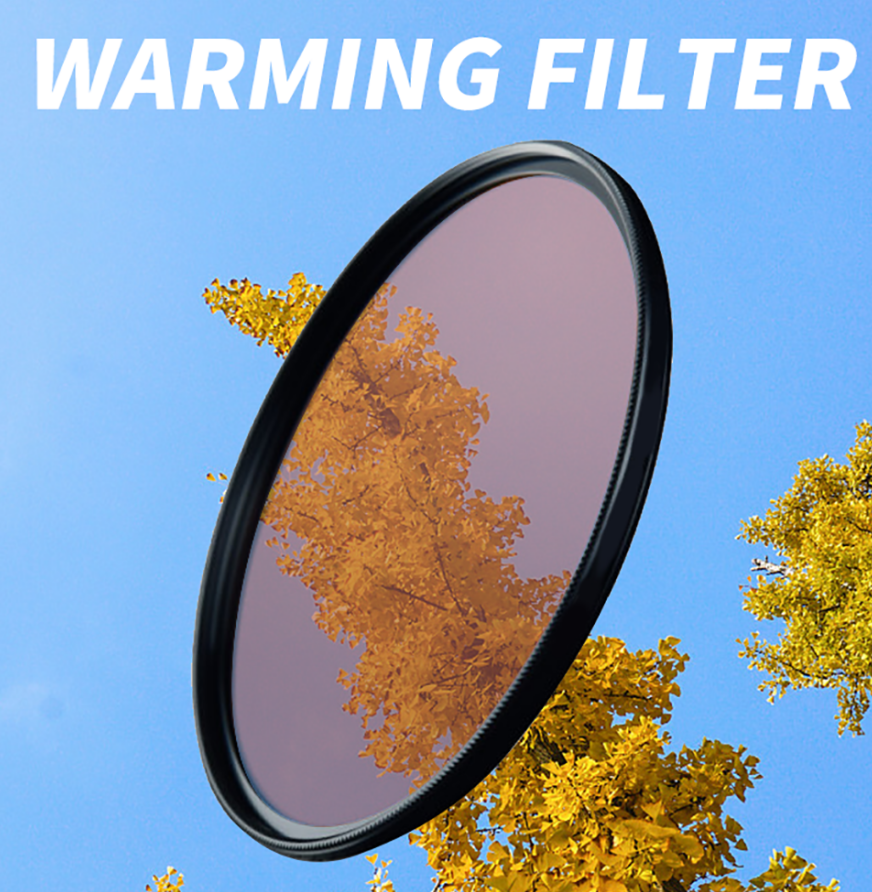
There's a simple, elegant solution that photographers have trusted for decades. Meet the 812 Warming Filter.
Take a look at this lineup.We're covering sizes from 37mm all the way up to 86mm (LL1810 to LL1823) .
| P/N | Description | Compatible Accessories | Remark |
| LL1810 | 812 Warming Filter for 37mm | Ø 37mm lens | Material: Optical glass + Aluminum Alloy Frame |
| LL1811 | 812 Warming Filter for 40.5mm | Ø 40.5mm lens | Material: Optical glass + Aluminum Alloy Frame |
| LL1812 | 812 Warming Filter for 43mm | Ø 43mm lens | Material: Optical glass + Aluminum Alloy Frame |
| LL1813 | 812 Warming Filter for 46mm | Ø 46mm lens | Material: Optical glass + Aluminum Alloy Frame |
| LL1814 | 812 Warming Filter for 49mm | Ø 49mm lens | Material: Optical glass + Aluminum Alloy Frame |
| LL1815 | 812 Warming Filter for 52mm | Ø 52mm lens | Material: Optical glass + Aluminum Alloy Frame |
| LL1816 | 812 Warming Filter for 55mm | Ø 55mm lens | Material: Optical glass + Aluminum Alloy Frame |
| LL1817 | 812 Warming Filter for 58mm | Ø 58mm lens | Material: Optical glass + Aluminum Alloy Frame |
| LL1818 | 812 Warming Filter for 62mm | Ø 62mm lens | Material: Optical glass + Aluminum Alloy Frame |
| LL1819 | 812 Warming Filter for 67mm | Ø 67mm lens | Material: Optical glass + Aluminum Alloy Frame |
| LL1820 | 812 Warming Filter for 72mm | Ø 72mm lens | Material: Optical glass + Aluminum Alloy Frame |
| LL1821 | 812 Warming Filter for 77mm | Ø 77mm lens | Material: Optical glass + Aluminum Alloy Frame |
| LL1822 | 812 Warming Filter for 82mm | Ø 82mm lens | Material: Optical glass + Aluminum Alloy Frame |
| LL1823 | 812 Warming Filter for 86mm | Ø 86mm lens | Material: Optical glass + Aluminum Alloy Frame |
Whether you're shooting with a vintage film camera, a modern digital body, or a compact camera with an adapter tube, there's an 812 filter here that will add just the right amount of warmth to your images.
So, What Exactly Is an 812 Warming Filter?
The 812 is a classic warming filter—specifically designed to add a subtle, natural warmth to your photos without the strong orange cast of heavier warming filters. It's a very gentle pinkish-amber color that counteracts cool, bluish light.
Think of it as a cup of hot cocoa for your images. It doesn't scream"look at me!"—it just makes everything feel a little cozier, a little more inviting.
When Would You Use an 812 Filter?
This filter shines in specific situations:
Open shade portraits: When you're photographing people in shade on a sunny day, the light is cool and blue. The 812 filter gently warms skin tones, making people look healthy and natural rather than pale and cold.
Overcast days: Gray skies can suck the warmth out of landscapes. An 812 filter adds a subtle golden touch that brings scenes back to life.
Sunsets (without overdoing it): Sometimes a sunset is beautiful, but you want to enhance it just a little. The 812 adds warmth without making it look fake or over-saturated.
Snow scenes: Snow reflects blue light like crazy. An 812 filter warms shadows and highlights, making snow scenes look more natural and inviting.
Film photography: If you shoot film—especially slide film where you can't easily correct color later—the 812 is an essential tool for getting accurate, beautiful skin tones in cool light.
Why 812? Why Not Just Use White Balance?
Great question. In the digital age, you can often adjust color temperature in camera or in post-processing. So why use a physical filter?
Three reasons:
It's subtle and natural: The 812 adds a very gentle warmth that's hard to replicate perfectly with digital sliders. It's not orange—it's just warm.
It works consistently: Set it and forget it. No worrying about whether your auto white balance got it right. The filter does its job every time.
It saves time: One less thing to adjust in post-processing. If you shoot JPEG or video, that's huge. If you shoot RAW, it's still one less edit to make.
It's essential for film: Film shooters don't have the luxury of fixing color later. The 812 is a must-have tool.
What's Inside?
These 812 warming filters feature optical glass in aluminum alloy frames. Optical glass ensures you're getting accurate color transmission without degrading image quality. The aluminum frame keeps everything lightweight and durable.
Q: How is this different from a basic warming filter or an 81A/81B?
A: The 812 is gentler than most warming filters. It's specifically designed to counteract the blue of open shade and overcast days without adding an obvious orange cast. It's subtle—almost invisible in some light, but just right when you need it. Think of it as the"barely there"warming filter that makes everything look better without looking filtered.
Q: Can't I just warm up my photos in Lightroom or Photoshop?
A: You can, and many photographers do. But there are advantages to getting it right in camera. First, it saves time—no need to tweak every image later. Second, if you shoot JPEG or video, you have less flexibility in post-processing. Third, seeing the warmth in your viewfinder as you shoot helps you compose with that mood in mind. And fourth, for film shooters, there is no"fix it later"—you need the filter.
Q: Will this filter make my photos look orange?
A: No—that's the beauty of the 812. It's a very gentle warming filter. It won't turn your images orange or make skin look like a bad spray tan. It just takes the edge off cool, blue light and adds a subtle, natural warmth. People will notice your photos look better, but they won't know why.
Q: Can I use this for landscapes?
A: Absolutely! An overcast landscape can look flat and cold. The 812 adds just enough warmth to bring out the natural beauty of the scene. It's especially lovely for golden hour shots where you want to enhance the warmth without overdoing it.
Q: Will this fit my lens?
A: Check your lens for the"Ø"symbol followed by a number—like Ø 58mm. That's your filter thread size. Match it to the product (e.g., LL1817 for 58mm). If your lens has that size, these will screw right on.
Q: Do I need to adjust exposure when using this filter?
A: The 812 is very subtle—it cuts very little light, usually less than 1/3 of a stop. Your camera's meter will handle it automatically. You won't notice any significant exposure change.
Q: Can I stack this with other filters?
A: You can, but be mindful. Stacking filters increases the risk of vignetting (dark corners) and can slightly reduce image quality. If you want to use, say, a polarizer with warming, consider doing one or the other, or be prepared for potential edge effects.
Q: Is this filter useful for video?
A: Yes! Video shooters love the 812 for interviews and portraits shot in open shade. It gives skin tones a natural, healthy look that's hard to beat. And because it's subtle, it works across multiple shots without calling attention to itself.
Q: What's the difference between this and an 81A filter?
A: The 81A is slightly stronger and more amber. The 812 is gentler and more subtle. Think of the 81 series as"noticeable warming"and the 812 as"barely-there warming that makes everything look better."Both have their place. The 812 is the choice when you want correction, not effect.
Q: Can I use this for indoor photography?
A: Possibly, but it depends on your lighting. Under tungsten (warm) lights, you don't need it. Under fluorescent (cool/green) lights, you'd want an FLD filter instead. The 812 is primarily for daylight situations where the light is naturally cool—open shade, overcast days, snow, etc.
Sometimes the best tools are the simplest ones. The 812 warming filter doesn't shout. It doesn't create dramatic effects that scream"I used a filter!"Instead, it quietly does its job—adding a touch of warmth, a hint of natural color, a subtle improvement that makes your photos look just a little bit better.
With optical glass construction, sizes to fit most lenses, and a gentle warming effect that photographers have trusted for decades, the 812 is one of those filters that, once you try it, you'll wonder how you lived without it.
Find your size, screw one on, and see what a little warmth can do. Your portraits, landscapes, and everyday shots will thank you.


